
Early Writing
Transcription
In Reception and Key Stage 1, we place a strong emphasis on transcription so that children develop secure, fluent foundations for writing. Handwriting is taught explicitly by teachers twice per week, with a clear progression of letter formation. Our aim is for children to become fixed, firm and fluent in their handwriting, reducing cognitive load so they can focus their attention on composition, vocabulary and the craft of writing as they enter KS2.
Across all lessons, teachers consistently address and correct letter formation to prevent misconceptions from becoming embedded. Children who require additional support take part in rapid handwriting booster sessions, focusing on accurate formation and developing automaticity. This ensures every child is equipped with the transcriptional fluency needed to express their ideas confidently as they move through school.
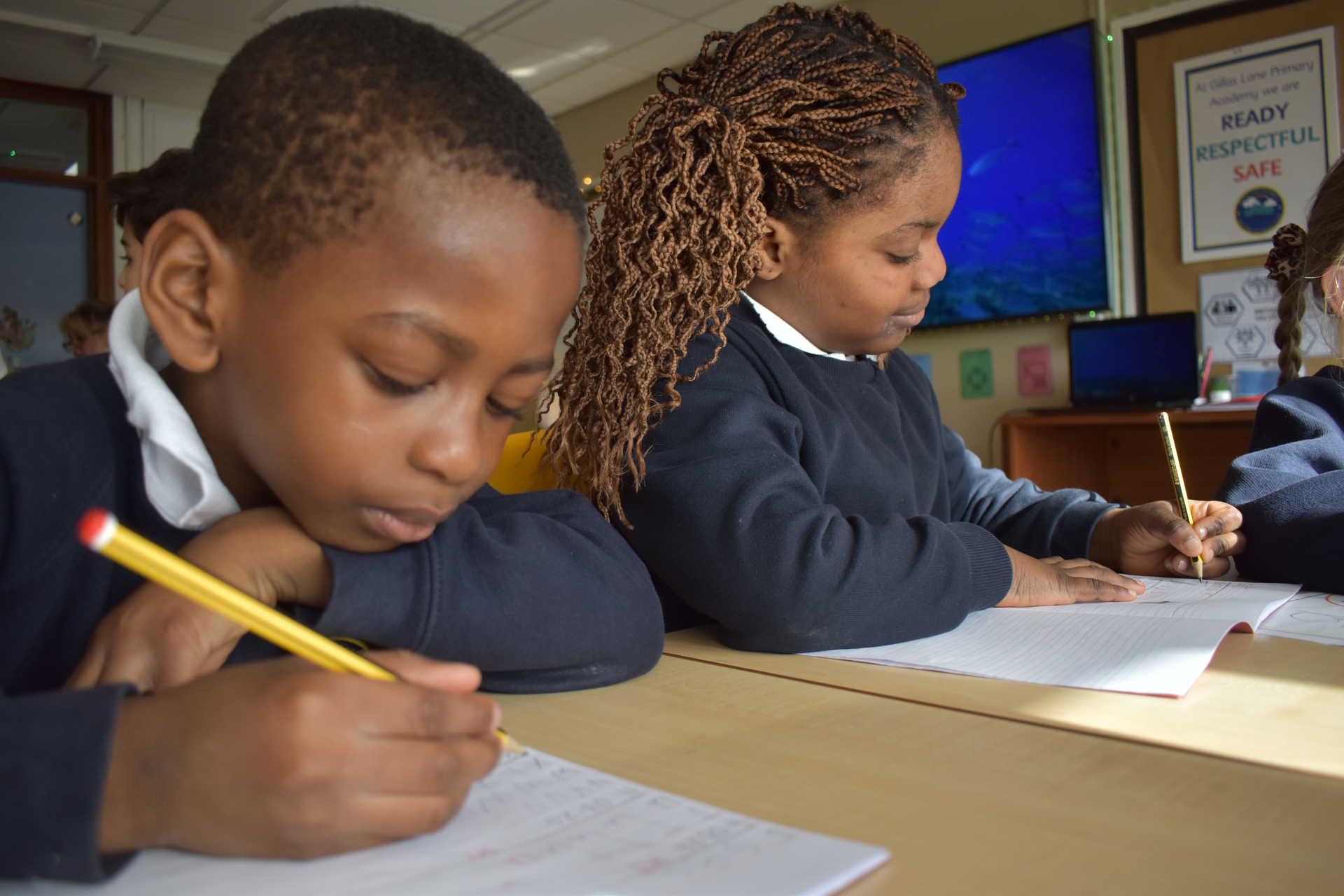
In Year 1, alongside their daily phonics programme, children also take part in a weekly spelling session following the Read Write Inc. (RWI) Spelling sequence. This ensures consistency with our phonics approach and supports children to apply their growing code knowledge accurately in their writing.
EYFS
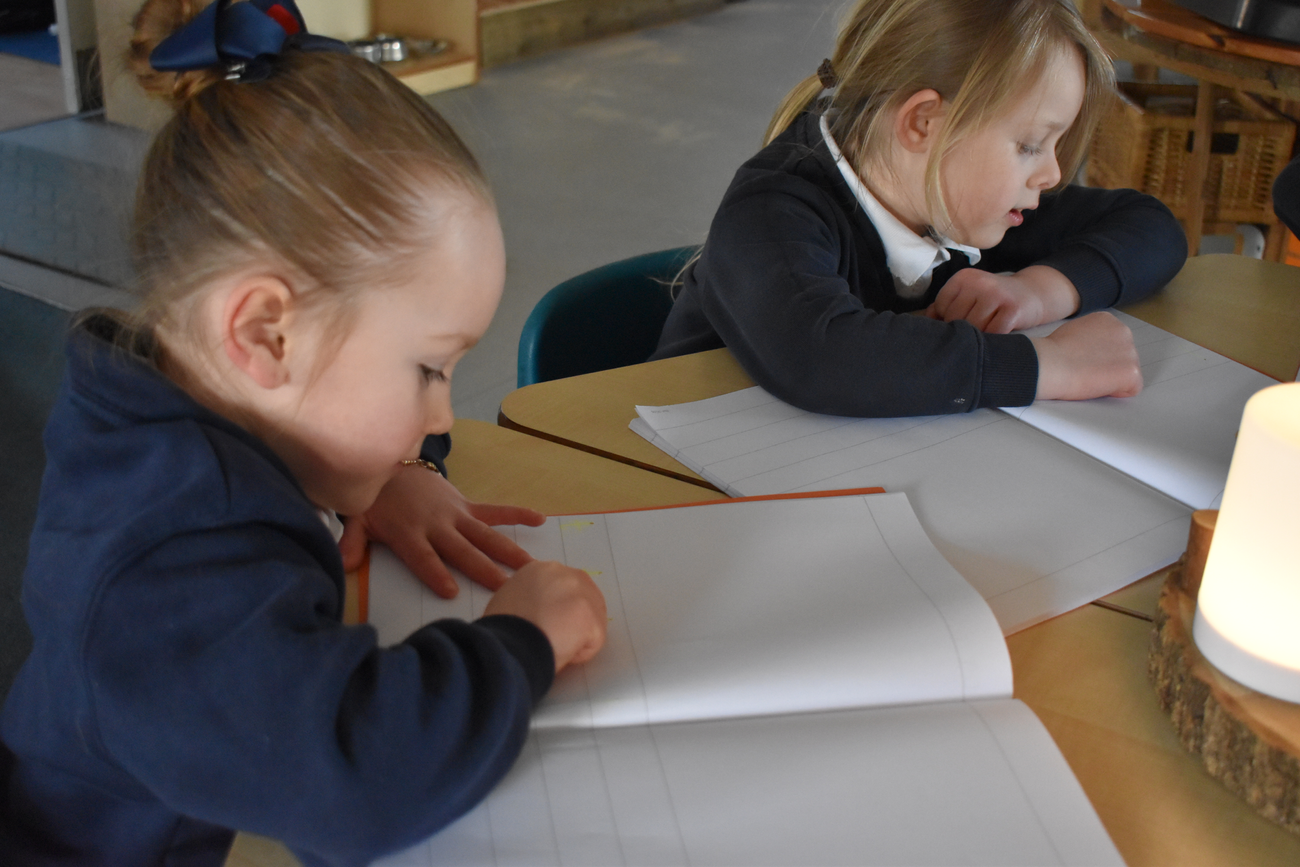
Our reading and writing journey begins with our youngest children in Nursery where pre-reading and pre-writing skills are planned for meticulously by our Early Years team. Our Early Years team make sure the environment includes a range of resources, activities and play that encourages gross and fine motor skills. As children move into Reception, they start their formal phonics teaching where reading and writing skills are interlinked. Drawing Club is a playful, story-led approach, supporting our teaching of writing. Children are invited into the “club”, where each session begins with a story, film clip, or picture book. The children draw and expand on the world of the story.
Drawing Club includes:
• mark-making and storytelling through pictures
• explicit teaching of new and ambitious vocabulary
• adding labels, symbols, or early attempts at writing alongside drawings
• composing “codes” and sentences orally
• class teacher modelling imaginative extensions (“What if one pig built a house out of chocolate?”)
• prompting children to add new details and vocabulary
Year 1
Our approach to teaching English in Year 1 is supported by The Curious Quests, building strong, robust foundations to prepare children for the Y2 and KS2 English curriculum. The Curious Quests is an immersive adventure into story, poetry, make-believe and gives children a childhood that brims with endless possibilities to invent, imagine and story dream. Before the approach begins, Year 1 children continue their Drawing Club lessons for the first half term, allowing for a smooth, structured transition to The Curious Quests.
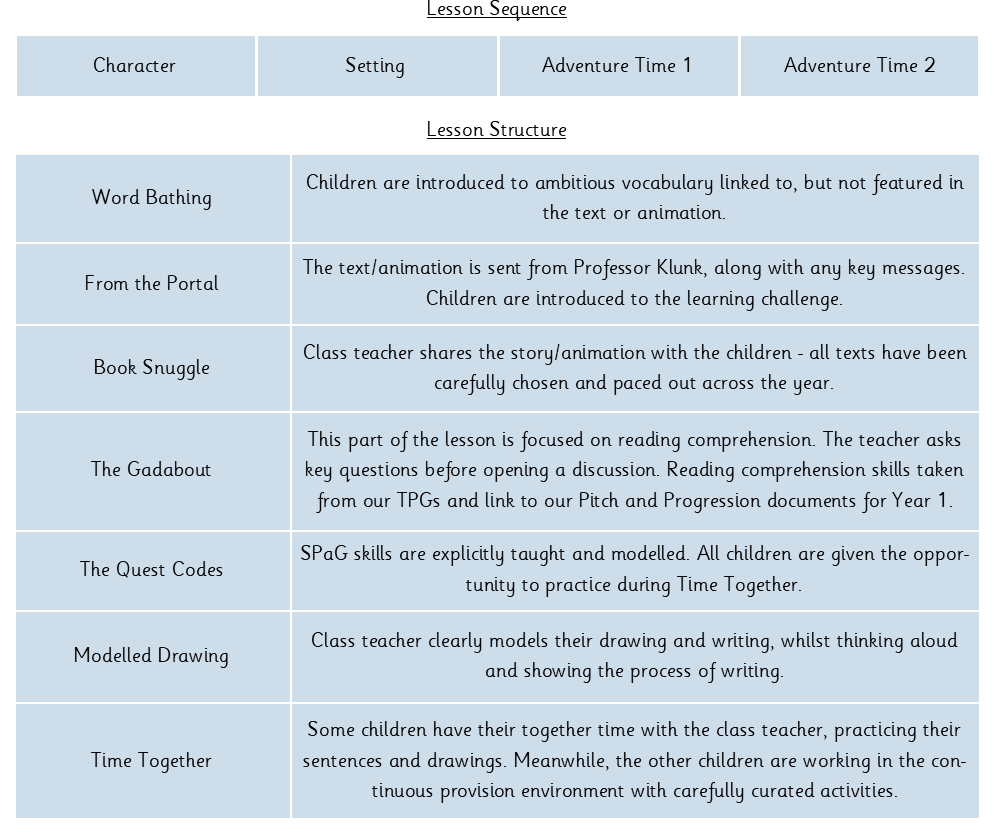
High quality texts, of a range of genres, and archaic animations are used as the stimuli for Curious Quests in Year 1. Alongside the National Curriculum, reading, writing and SPaG objectives are taken from our TPGs, carefully paced out across the year to ensure progression and to strong foundations.
Alongside The Curious Quests, children take part in dedicated Writing Weeks across the year. These weeks give pupils the opportunity to apply their developing skills to a wider range of genres beyond the Quest structure. Each Writing Week is built around a high-quality text or animation, and provides explicit teaching of the features, vocabulary and structures needed for that genre.
Writing Weeks ensure that all children experience a balanced and varied writing diet, strengthening the foundations laid through The Curious Quests and preparing them for the wider expectations of Year 2 and beyond. They also provide valuable opportunities for modelling, shared writing and independent application, helping every child to see themselves as an author.


